





Blog

Best Software Consulting Companies in the USA
The modern corporate world is plagued by the age-old problem of how to maintain a creative edge, enhance processes, and provide..
Read More about Best Software Consulting Companies in the USARelease software with greater confidence through quality engineering built into every stage of delivery. Innvonix delivers quality engineering services that help organizations improve software reliability, reduce release risk, and accelerate delivery through risk-based testing, test automation, performance validation, and continuous quality improvement.

Software quality is not a final checkpoint. It is built through the decisions, practices, and controls that shape how software is designed, developed, tested, and released. Innvonix aligns testing strategies, automation, performance validation, and quality metrics with business priorities, helping technology leaders accelerate releases without compromising reliability.
Our approach turns quality risks into manageable priorities, giving engineering teams a clear path to stronger software, more predictable releases, and measurable business outcomes.
Integrate testing and reviews from requirements onward to identify defects earlier, reduce rework, and lower the cost of fixing issues.

Automate repeatable, high-value tests to improve feedback speed, reduce manual regression effort, and support consistent validation across releases.

Evaluate application behavior under expected and peak workloads to identify bottlenecks and support reliable performance as demand grows.

Validate API behavior, data handling, error responses, and security controls to improve reliability across connected applications and enterprise systems.

Prioritize testing based on business impact, failure likelihood, and technical complexity, directing effort toward the risks that matter most.

Track defects, test coverage, execution results, and release criteria to help engineering leaders make informed release decisions.
Our software quality engineering services help organizations move beyond last-minute testing toward a structured, automated, and measurable approach. We assess existing practices, define testing priorities, and implement the right combination of testing capabilities to support your software delivery lifecycle.



Establish a quality strategy aligned with your business objectives, technology landscape, and delivery model. Our quality engineering consulting services assess testing maturity, identify process gaps, define quality metrics, and create a practical roadmap for improving software reliability.


Reduce repetitive testing effort and accelerate feedback with maintainable automated test suites. Our software test automation services cover UI, API, smoke, and regression testing, with automation integrated into CI/CD pipelines where appropriate. We help teams improve test consistency, expand repeatable coverage, and support faster release cycles.


Understand how your applications behave under varying workloads before performance issues affect users. Our performance testing services cover load, stress, endurance, and scalability testing to identify bottlenecks, evaluate system behavior, and guide performance improvements. We help teams assess capacity and prepare applications for changing demand.


Improve the reliability of connected applications through systematic API validation. Our API testing services assess functional behavior, data integrity, input validation, error handling, authentication, authorization, and performance. We help identify integration risks early and verify that APIs behave consistently across dependent systems.


Validate application functionality, usability, compatibility, and business workflows through structured manual and automated testing. Our software testing services include functional, regression, exploratory, cross-browser, mobile, accessibility, and user acceptance testing, selected according to application requirements and risk.


Extend your testing capacity without adding unnecessary operational complexity. Our QA outsourcing services provide dedicated QA professionals or managed testing teams that work within your existing delivery processes. Scale support around project demand, specialist testing requirements, and release schedules while maintaining agreed quality standards and reporting.
Our quality engineering framework provides a structured approach to assessing testing maturity, prioritizing risks, designing test strategies, and integrating quality into software delivery. Each phase establishes clear priorities and measurable checkpoints to support continuous improvement.
Review existing testing practices, tools, environments, defect patterns, and release workflows. Identify coverage gaps, process bottlenecks, and opportunities to improve quality and delivery efficiency.
Evaluate potential failures based on business impact, likelihood, technical complexity, and remediation effort. Prioritize testing activities around critical workflows, high-risk components, and release requirements.
Define the testing approach, coverage model, automation priorities, test environments, data requirements, and quality metrics. Establish a practical strategy aligned with your architecture, delivery practices, and team capabilities.
Execute the agreed testing strategy, integrate automated checks into CI/CD pipelines where appropriate, and evaluate results against defined quality criteria. Use defect trends, test outcomes, and delivery metrics to refine coverage and improve future releases.
Quality engineering helps organizations address recurring software delivery challenges with structured testing, automation, and measurable controls.
Business Challenge
Defects surface late in the release cycle
With Quality Engineering Services
Earlier validation helps identify issues when they are less costly to resolve.
Business Challenge
Manual regression testing slows releases
With Quality Engineering Services
Automated regression checks improve repeatability and feedback speed.
Business Challenge
Applications struggle under real workloads
With Quality Engineering Services
Performance testing identifies bottlenecks and capacity constraints before launch.
Business Challenge
API and integration failures disrupt operations
With Quality Engineering Services
Systematic API testing validates behavior, data handling, and error responses.
Business Challenge
Teams lack clear release-readiness indicators
With Quality Engineering Services
Defined quality metrics and release criteria support informed decisions.
Business Challenge
Testing capacity cannot keep pace with development
With Quality Engineering Services
QA outsourcing and managed testing provide flexible access to testing resources.
Business Challenge
Test suites become brittle and expensive to maintain
With Quality Engineering Services
Maintainable automation design helps reduce avoidable upkeep and improve long-term value.

We align testing priorities with business objectives, critical workflows, customer expectations, and release requirements rather than applying a generic checklist.

We evaluate tools and frameworks against your technology stack, team capabilities, testing needs, and long-term operating model to support practical, sustainable decisions.

Our software engineering and testing capabilities help connect quality practices with application design, development, integration, and deployment workflows.

We account for business impact, data sensitivity, compliance obligations, system complexity, and delivery timelines when defining testing priorities and coverage.

We work with product, engineering, and operations teams to align test execution, communicate findings, resolve issues, and maintain visibility throughout delivery.

We establish reusable test assets, maintainable automation, and repeatable practices that your teams can extend as applications and business requirements evolve.


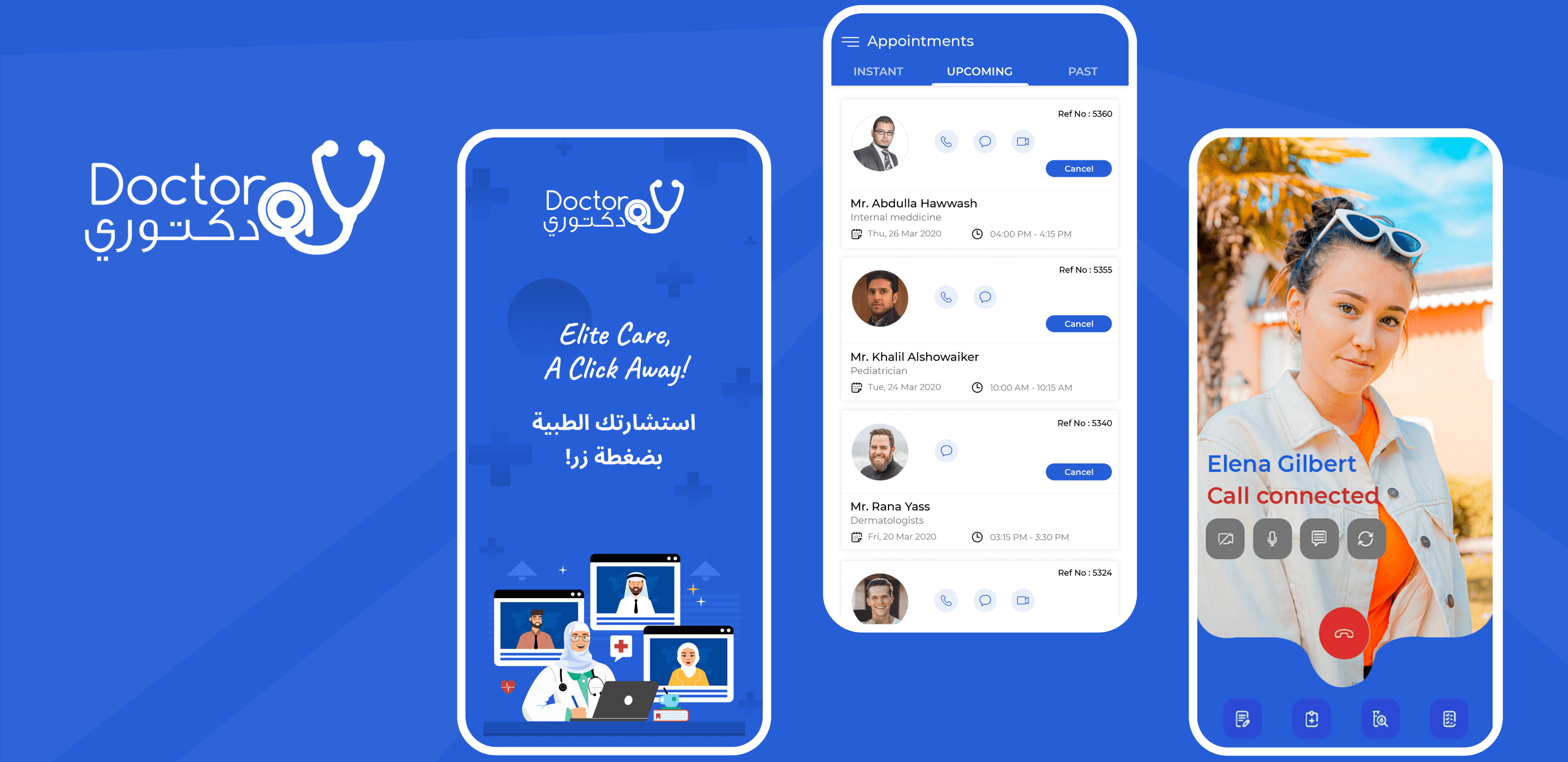
Doctoray is a digital healthcare platform designed to make medical consultations more accessible by connecting patients with doctors online. The platform enables users to discover doctors, check availability, schedule appointments, and consult healthcare professionals remotely through chat, audio, or video.
My Diet Studio is an online diet and wellness program provider offering personalized coaching to help individuals lose weight and improve their overall health in a convenient, accessible, and affordable way. Innvonix partnered with the client to build a platform combining personalized diet planning, body composition analysis, and continuous follow-up support delivered via WhatsApp, messaging, and calls.
Every industry has distinct operational risks, compliance requirements, and user expectations. Innvonix aligns testing approaches with your application landscape, business workflows, and industry-specific requirements.


Validate clinical and patient-facing applications with attention to data accuracy, privacy, interoperability, and applicable regulatory requirements.


Test financial applications for transaction accuracy, access controls, data integrity, performance, and auditability.


Validate product discovery, checkout workflows, payment integrations, and platform performance during periods of peak demand.


Test learning management and administrative platforms for functionality, accessibility, cross-device compatibility, and concurrent usage.


Validate production, supply chain, and connected operations software for data integrity, workflow reliability, and system interoperability.


Test tracking, routing, shipment management, and integration workflows for accuracy, reliability, and timely data exchange.


Validate booking systems and guest-facing applications across devices and channels, including performance during peak booking periods.


Test agricultural data platforms and field applications across supported devices, network conditions, and operational environments.


Validate engineering and manufacturing applications for precision, data integrity, workflow consistency, and dependable system integrations.


Test client-facing and internal business applications for functionality, security, workflow accuracy, and consistent performance.


Validate property management, transaction, and tenant platforms for data accuracy, integration reliability, and usability.


Integrate automated, API, and performance testing into frequent release cycles to support reliable, scalable, multi-tenant software products.
Validate clinical and patient-facing applications with attention to data accuracy, privacy, interoperability, and applicable regulatory requirements.
Read More about HealthcareOur engineering experience and delivery capabilities help organizations address complex technology requirements while building software quality into their delivery processes.
Our experience across industries, technology stacks, and delivery models provides a foundation for supporting complex software initiatives.
Years of Experience
Projects Delivered
Global Clients
Countries Served
Our engineering teams bring technical breadth and delivery capacity to support applications, platforms, and integrated systems across varied technology environments.
Technology Experts
Technologies
Development Hours
Production Systems
Our engineering expertise spans application testing, automation, APIs, and integrated systems, helping teams validate software across interconnected environments.
Technology Stacks Supported
Systems Integrations Delivered
APIs and Endpoints Engineered
Production Systems Maintained
Years of Experience
Projects Delivered
Global Clients
Countries Served
Establish essential testing practices and automation early to maintain software quality as your product, customer base, and engineering team grow.

Move beyond manual, late-stage testing with structured quality assurance services that improve feedback speed, reduce release risk, and support predictable delivery.

Coordinate quality practices across applications, engineering teams, and vendors with consistent testing standards, risk-based governance, and clear release-readiness criteria.

Real-world insights from enterprise technology delivery and transformation programs, with practical perspectives across AI, cloud, and scalable digital systems.
The modern corporate world is plagued by the age-old problem of how to maintain a creative edge, enhance processes, and provide..
Read More about Best Software Consulting Companies in the USA

There are constant changes happening every day in the software development industry as well as in the software development...
Read More about Top Software Development Trends to Watch in 2025

Business growth is exciting, but no one said it was all sunshine and rainbows. All of a sudden your to-do list is endless, you need certain skill sets
Read More about What is Staff Augmentation? How Staff Augmentation Benefits Business Growth?

Building a mobile application entails sophisticated planning, and one of the most pivotal decisions is deciding..
Read More about In-House vs. Outsourcing Mobile App Development: Which is Right for Your Business?

Software company roles vary from one company to another because of rapid expansion and flexibility. In this article, we...
Read More about Fundamental Roles in Software CompanyConnect quality engineering with the engineering capabilities needed to design, build, integrate, and operate reliable software.


Build CI/CD pipelines, infrastructure automation, and self-service developer platforms that support consistent, efficient software delivery.


Manage CI/CD pipelines, infrastructure, and monitoring to maintain reliable operations and support continuous delivery.


Design scalable, secure, and maintainable applications that accommodate evolving business requirements and technology needs.


Design and build tailored applications aligned with your business processes, data requirements, and long-term objectives.


Develop web and mobile applications that deliver consistent user experiences and integrate with APIs and third-party services.


Design, build, and connect APIs, enterprise applications, and third-party platforms to support reliable data exchange and business workflows.
Build CI/CD pipelines, infrastructure automation, and self-service developer platforms that support consistent, efficient software delivery.
Learn More about DevOps & Platform EngineeringFind answers to common questions about quality engineering, software testing, automation, performance validation, and QA outsourcing.
Quality assurance focuses on the processes and practices used to maintain software quality, while testing verifies whether software behaves as expected. Quality engineering takes a broader lifecycle approach by combining preventive practices, risk-based testing, automation, and measurement. It encourages teams to address quality throughout design, development, and release rather than relying only on final-stage testing. Manual and exploratory testing remain important parts of this approach.
Automation is most valuable for repeatable, high-value checks such as smoke tests, regression suites, API validation, and data-driven scenarios. Manual and exploratory testing remains useful for usability assessment, investigative testing, complex user journeys, and areas that change frequently. The right balance depends on business risk, test stability, execution frequency, maintenance effort, and expected return on investment.
Performance testing is valuable before major launches, seasonal demand peaks, significant architecture changes, and expected increases in users or data. It can include load testing under expected usage, stress testing beyond normal operating conditions, endurance testing over extended periods, and scalability testing. Results help teams identify bottlenecks, understand system limits, and prioritize performance improvements.
APIs connect applications, services, and enterprise systems, so failures can affect multiple workflows and dependent platforms. API testing validates functional behavior, data handling, input validation, error responses, authentication, authorization, and performance. Testing APIs independently can help teams identify integration defects earlier and reduce the risk of failures reaching users or production systems.
QA outsourcing extends your testing capacity through dedicated testers, specialist testing support, or a managed testing team. The engagement can align with your existing development processes, tools, communication channels, and release schedules. Scope, responsibilities, reporting, and quality metrics are agreed upon at the outset, with capacity adjusted according to project requirements and delivery priorities.
Effectiveness can be measured through indicators such as defect leakage, defect resolution time, test coverage, automated test execution time, regression cycle duration, and release stability. The most useful metrics depend on business objectives and the application environment. We recommend selecting a focused set of indicators that helps teams make better decisions rather than optimizing for test counts alone.
Yes. Automated tests and quality checks can be integrated into CI/CD pipelines to validate code changes, detect regressions, and provide feedback before deployment. The appropriate checks depend on application architecture, pipeline design, test execution time, and release risk. A staged approach helps teams balance validation depth with delivery speed.

Improve software reliability, strengthen release confidence, and establish a quality engineering approach aligned with your business goals. Partner with Innvonix to assess your testing practices, prioritize risks, and build a practical path toward faster, more dependable software delivery.
Connect with our experts to explore opportunities across AI, software, cloud, integration, and digital transformation.