





Blog

Step by Step Guide to Mobile App Development Process
The process begins with an idea. Identifying a problem to solve or a need to fulfill is key. This phase involves market...
Read More about Step by Step Guide to Mobile App Development Process
As software delivery accelerates, security must evolve alongside engineering practices. DevSecOps integrates security into application development, infrastructure, and deployment through automation and continuous validation. Innvonix aligns secure pipelines, infrastructure protection, and software supply chain controls with engineering priorities, helping organizations reduce risks without slowing delivery.
We transform security from a release-stage checkpoint into an engineering capability that protects applications, strengthens development practices, and supports continuous product innovation.
Define security policies, configurations, and controls in version-controlled code, making enforcement consistent, auditable, and repeatable across development environments.

Integrate security scans and automated tests into development pipelines, giving engineers actionable feedback early and reducing the effort required for late-stage remediation.

Protect build systems, credentials, repositories, and infrastructure configurations against unauthorized access, tampering, and deployment risks.

Secure container images, orchestration environments, and application workloads through image scanning, admission policies, configuration validation, and runtime monitoring.

Establish visibility into software dependencies, build artifacts, and release components through Software Bills of Materials (SBOMs), artifact signing, and provenance verification.

Establish shared security ownership, measurable controls, and continuous monitoring across development, security, and operations teams.

Our DevSecOps engineering teams help organizations assess security maturity, modernize software delivery pipelines, and integrate automated security controls. From architecture and implementation to ongoing optimization, we build security capabilities around existing engineering workflows.



Assess DevSecOps maturity, identify software delivery risks, and define implementation roadmaps covering security architecture, governance, responsibilities, and measurable engineering objectives.


Design and engineer secure CI/CD pipelines, reusable automation frameworks, security architectures, and developer guardrails that integrate security into software delivery workflows.


Deploy and configure security controls across development pipelines, including static code analysis, dependency scanning, secrets detection, container scanning, and infrastructure-as-code validation.


Automate security policies, vulnerability prioritization, issue routing, remediation workflows, and compliance evidence collection to reduce manual effort and improve engineering consistency.


Secure cloud-native applications, container images, Kubernetes clusters, and infrastructure configurations through policy enforcement, access controls, vulnerability assessment, and continuous monitoring.


Provide ongoing engineering support to manage security tooling, monitor pipeline findings, maintain policies, optimize security controls, and improve software delivery security.
Our framework integrates security throughout the software development lifecycle through four phases aligned with engineering and operational priorities.
Evaluate CI/CD pipelines, development environments, security tooling, access controls, and existing practices to identify vulnerabilities, process gaps, and security maturity benchmarks.
Prioritize security improvements based on business risk, vulnerability severity, remediation effort, and operational impact, creating a practical implementation roadmap with measurable targets.
Define pipeline architecture, security tooling, automated controls, policy requirements, exception workflows, and performance metrics aligned with application architecture and organizational objectives.
Deploy security controls in phases, automate recurring activities, enable engineering teams, and continuously evaluate security coverage, remediation performance, and delivery efficiency.
Business Challenge
Security reviews at the end of development delay releases
DevSecOps Engineering Solution
Automated security validation identifies vulnerabilities earlier in development.
Business Challenge
Developers receive excessive, unprioritized security findings
DevSecOps Engineering Solution
Risk-based prioritization delivers actionable remediation guidance.
Business Challenge
CI/CD pipelines and credentials remain exposed
DevSecOps Engineering Solution
Pipeline hardening and secrets management strengthen access security.
Business Challenge
Infrastructure and container configurations become inconsistent
DevSecOps Engineering Solution
IaC validation and policy enforcement improve configuration consistency.
Business Challenge
Software dependencies and release components lack visibility
DevSecOps Engineering Solution
SBOMs and artifact verification improve software supply chain transparency.
Business Challenge
Compliance evidence requires extensive manual effort
DevSecOps Engineering Solution
Automated evidence collection simplifies audit preparation.
Business Challenge
Security and engineering teams operate in silos
DevSecOps Engineering Solution
Shared workflows and security metrics establish joint accountability.

We align security investments with product objectives, development priorities, and risk exposure to focus engineering efforts where they create measurable value.

We leverage your existing CI/CD platforms, cloud infrastructure, and security tools, recommending additional technologies only when they address specific engineering requirements.

We support the complete DevSecOps journey, from maturity assessment and architecture design to engineering, automation, and ongoing optimization.

We introduce security controls in manageable phases, validate their effectiveness, and minimize unnecessary disruption to development and release workflows.

Our engineering teams collaborate with development, security, and operations stakeholders to integrate security controls into existing product engineering processes and technical environments.

We deliver documented pipelines, reusable security policies, and knowledge transfer that help internal teams maintain and evolve their DevSecOps capabilities.
Every industry has unique security risks and compliance needs. Innvonix aligns DevSecOps engineering with industry requirements and business priorities.


Protect clinical applications and patient-facing platforms through controlled software releases, security validation, access governance, and traceable development changes.


Strengthen financial software delivery with automated security controls, sensitive data protection, access governance, audit trails, and continuous compliance evidence.


Secure high-frequency commerce releases while protecting payment workflows, customer information, e-commerce platforms, and connected retail applications.


Protect learning management systems and administrative platforms through secure development workflows, controlled deployments, and consistent release validation.


Secure industrial applications, connected production environments, and enterprise platforms that support manufacturing operations and supply chain continuity.


Strengthen the security of tracking, dispatch, and partner-facing applications through automated testing and controlled software delivery.


Protect booking platforms, guest-facing applications, and connected hospitality systems through secure release processes and access controls.


Secure agricultural data platforms, connected field applications, and cloud-to-edge environments through consistent security controls and vulnerability management.


Protect engineering applications, manufacturing platforms, and development environments that process sensitive intellectual property and proprietary designs.


Strengthen client portals and business applications through secure development workflows, access controls, and controlled deployments.


Protect property platforms, transaction applications, and tenant management systems through automated security validation and infrastructure controls.


Secure multi-tenant applications and high-frequency release environments with scalable pipeline security, dependency management, and continuous vulnerability monitoring.
Protect clinical applications and patient-facing platforms through controlled software releases, security validation, access governance, and traceable development changes.
Read More about Healthcare
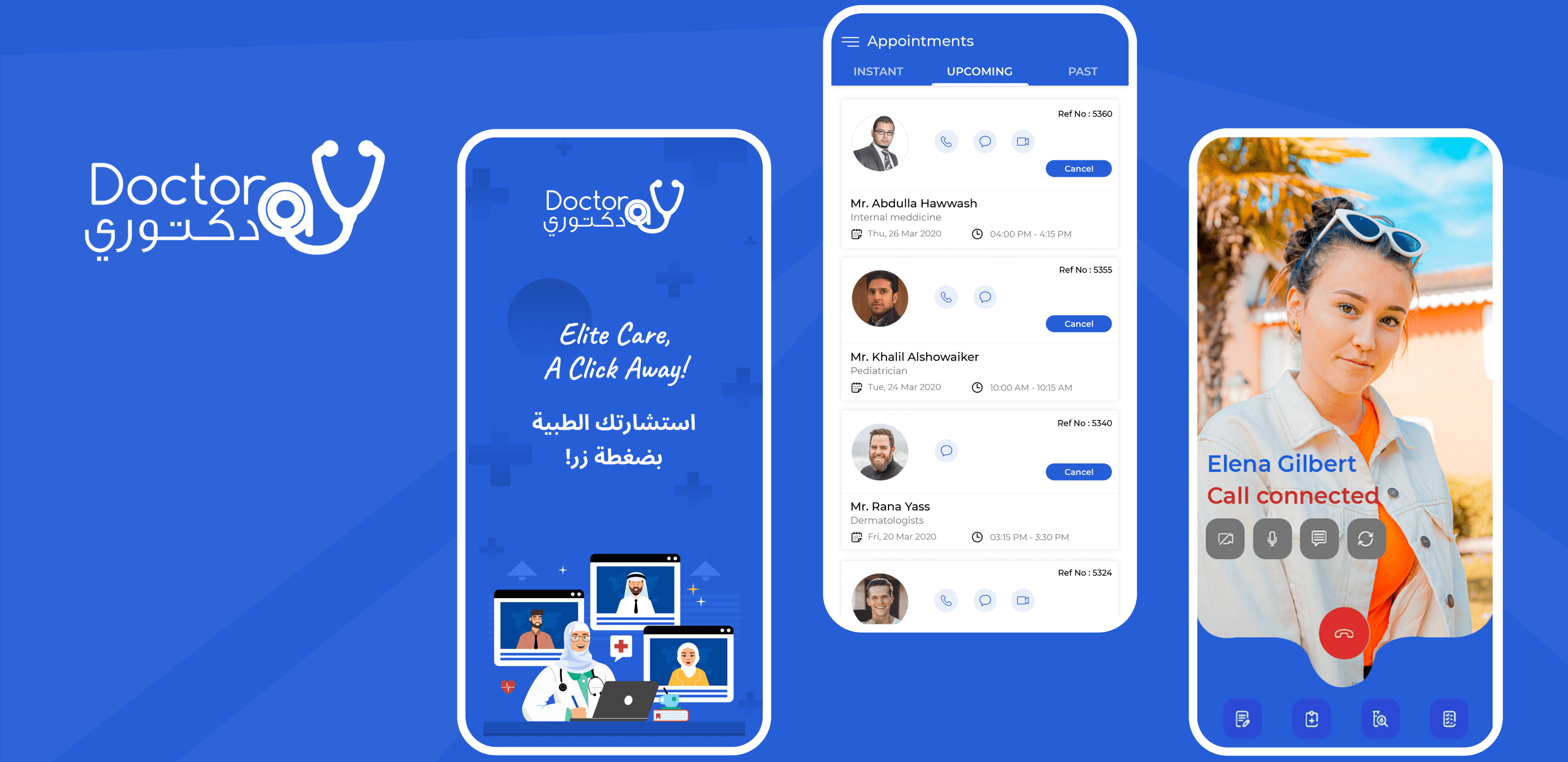
Doctoray is a digital healthcare platform designed to make medical consultations more accessible by connecting patients with doctors online. The platform enables users to discover doctors, check availability, schedule appointments, and consult healthcare professionals remotely through chat, audio, or video.
My Diet Studio is an online diet and wellness program provider offering personalized coaching to help individuals lose weight and improve their overall health in a convenient, accessible, and affordable way. Innvonix partnered with the client to build a platform combining personalized diet planning, body composition analysis, and continuous follow-up support delivered via WhatsApp, messaging, and calls.
We combine engineering expertise and technology capabilities to strengthen security, improve operational consistency, and accelerate digital initiatives.
Our experience across industries and technology environments helps organizations execute complex engineering initiatives with confidence.
Years of Experience
Projects Delivered
Global Clients
Countries Served
Our multidisciplinary engineering teams bring the experience and delivery capacity to support complex software, infrastructure, and security initiatives.
Team Members
Senior Developers
Technologies
Development Hours Delivered
Our experience across production systems, cloud environments, and enterprise integrations supports secure, scalable, and connected technology ecosystems.
Production Systems
Cloud Infrastructures Managed
APIs and Endpoints Engineered
System Integrations Delivered
Years of Experience
Projects Delivered
Global Clients
Countries Served
Establish essential security controls, automate vulnerability checks, and build secure development practices that scale alongside product and business growth.

Modernize delivery pipelines, standardize security controls, and improve engineering visibility across applications and development teams.

Coordinate security across distributed engineering teams, complex infrastructure, and multiple delivery pipelines through centralized governance and scalable automation.

Real-world insights from enterprise technology delivery and transformation programs, with practical perspectives across AI, cloud, and scalable digital systems.
The process begins with an idea. Identifying a problem to solve or a need to fulfill is key. This phase involves market...
Read More about Step by Step Guide to Mobile App Development Process

As an entrepreneur, does it make sense to invest heavily in a product only to find out there's no demand for it? No. Innovative..
Read More about The Ultimate Minimum Viable Product (MVP) Development Guide

There are constant changes happening every day in the software development industry as well as in the software development...
Read More about Top Software Development Trends to Watch in 2025

The significance of mobile platforms nowadays is well known. By the end of 2024, mobile applications are expected to bring in more than $935 billion. 2.87 million
Read More about Guide to Hire the Right Mobile App Development Company

Different mobile platforms and development approaches have their preferred programming languages...
Read More about Top Mobile App Development Trends to Watch Out for in 2025Connect DevSecOps Engineering with complementary application development, security, and infrastructure capabilities required to build, secure, and operate modern software systems.


Design and develop scalable web, mobile, and enterprise applications aligned with business requirements and product objectives.


Strengthen application protection through security assessments, vulnerability testing, secure coding practices, and application security testing.


Engineer CI/CD pipelines, infrastructure automation, and developer platforms that improve delivery efficiency and engineering productivity.


Manage CI/CD pipelines, cloud infrastructure, and operational workflows to maintain reliable and consistent software delivery.


Improve software quality through test automation, performance validation, API testing, and comprehensive quality engineering.


Improve system availability, performance, and resilience through reliability engineering and operational best practices.
Design and develop scalable web, mobile, and enterprise applications aligned with business requirements and product objectives.
Learn More about Application Development ServicesConnect with our experts to explore opportunities across AI, software, cloud, integration, and digital transformation.
Find answers about DevSecOps engineering, secure implementation, automated security testing, and modern software delivery practices.
DevSecOps engineering integrates security practices into every stage of the software development lifecycle, from planning and coding to testing, deployment, and operations. While DevOps focuses on collaboration and delivery automation, DevSecOps extends these practices with automated security testing, vulnerability management, access controls, and continuous security validation.
DevSecOps engineering integrates automated security checks directly into CI/CD pipelines, enabling teams to identify vulnerabilities during development rather than after deployment. Risk-based prioritization, optimized scanning rules, automated feedback, and phased policy enforcement help reduce unnecessary delays while maintaining security standards and release efficiency.
DevSecOps as a Service provides ongoing engineering support for security automation, pipeline monitoring, vulnerability management, policy maintenance, and compliance reporting. Businesses can consider this model when they need specialized DevSecOps expertise, continuous security oversight, or scalable engineering support without maintaining a dedicated in-house team.
DevSecOps effectiveness can be measured through security and delivery metrics, including vulnerability remediation time, security test coverage, critical vulnerabilities reaching production, policy compliance, and deployment frequency. Tracking these indicators against established baselines helps organizations evaluate security improvements, identify operational gaps, and measure the impact of their implementation.
DevSecOps engineering uses a combination of CI/CD, code analysis, vulnerability scanning, infrastructure automation, and container security tools. Common technologies include GitHub Actions, GitLab CI/CD, Jenkins, SonarQube, Snyk, Trivy, Terraform, and Kubernetes security solutions. The right toolset depends on application architecture, existing technology stacks, and security requirements.
Yes. DevSecOps engineering can extend existing CI/CD pipelines by integrating automated code analysis, dependency scanning, secrets detection, container security, and infrastructure-as-code validation. Organizations do not necessarily need to replace their current delivery infrastructure. Implementation can be aligned with existing tools, workflows, architecture, and security priorities.
DevSecOps improves cloud-native application security by integrating protection across containers, Kubernetes clusters, cloud infrastructure, and deployment pipelines. Practices such as container image scanning, infrastructure-as-code validation, access management, configuration checks, and continuous vulnerability monitoring help organizations identify security gaps and strengthen protection across cloud environments.
DevSecOps engineering improves software delivery by identifying security vulnerabilities earlier, automating repetitive security checks, and integrating validation into CI/CD workflows. This helps engineering teams reduce manual reviews, address risks before production, improve release confidence, and maintain consistent delivery practices without treating security as a final-stage checkpoint.

Integrate security into your software development lifecycle with Innvonix DevSecOps Engineering. Strengthen application security, automate delivery pipelines, and establish engineering practices designed for continuous improvement.